
Key Takeaways
- In Georgia, field sobriety tests are voluntary, and you can legally refuse them without automatic penalties.
- Refusing a field sobriety test does not prevent arrest if the officer has other evidence of impairment.
- Refusal may be used as evidence against you in court, depending on the circumstances.
- Understanding the distinction between field sobriety tests and chemical tests is essential for protecting your rights.
Table of Contents
- What Are Field Sobriety Tests?
- Legal Status of FST Refusal in Georgia
- Consequences of Refusing Field Sobriety Tests
- Field Sobriety Tests vs. Chemical Tests
- Impact on Your DUI Case
- How to Handle a Traffic Stop in Georgia
- Final Thoughts
Field sobriety tests are a common tool used by law enforcement in Georgia to help determine if a driver may be under the influence of alcohol or drugs. Many drivers facing a traffic stop wonder whether they have the right to refuse to take these tests. Understanding your rights and the potential implications of your decision can make a crucial difference in the outcome of any DUI investigation. To get detailed guidance about your specific situation and how DUI laws can impact your case, you may benefit from consulting with a knowledgeable Georgia DUI lawyer.
Field sobriety tests are often perceived as mandatory, but the law in Georgia treats these procedures differently from chemical tests like breath, blood, or urine analysis. The following article will explain your legal options, the risks involved with either complying or refusing, and how these choices may affect your defense strategy.
Understanding your rights during a DUI stop provides peace of mind and can help avoid common mistakes that make legal defense more difficult. Being prepared to handle questions or requests calmly at a roadside stop is essential to protecting your future.
Field sobriety tests (FSTs) are a set of physical and cognitive exercises administered by police officers when they suspect a driver may be impaired. The most common standardized tests include the Horizontal Gaze Nystagmus (HGN), the Walk-and-Turn, and the One-Leg Stand. Officers use these tests to observe balance, coordination, and eye movement, which can be affected by alcohol or other substances.
Non-standardized tests also exist, but those are less likely to be considered reliable in court. Officers must follow specific procedures during these tests, but even then, subjective judgment plays a significant role in determining whether someone passes or fails.
Legal Status of FST Refusal in Georgia
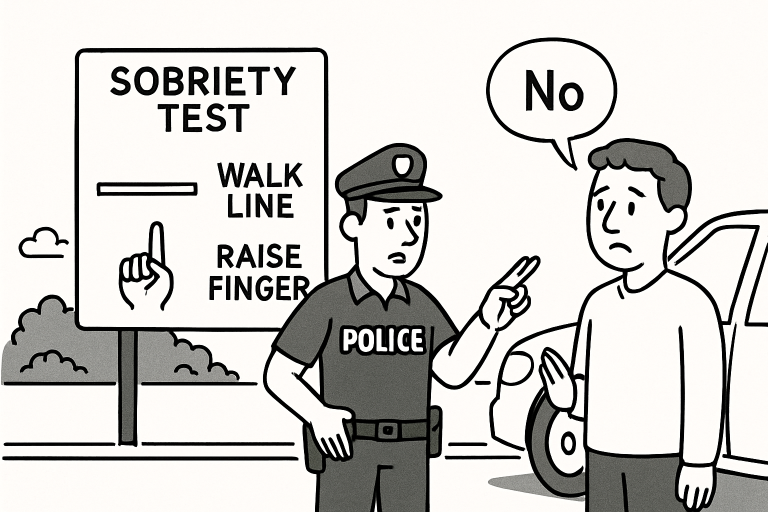
Georgia law allows drivers to refuse field sobriety tests without automatic legal penalties such as license suspension. Unlike chemical testing, there is no implied consent statute that applies to FSTs. When an officer asks you to perform these voluntary tests, you are not obligated to comply. You can politely decline by saying you would prefer not to participate.
Your refusal to participate in field sobriety testing may be reported by the officer in their arrest documents or used to justify further investigation. However, this refusal cannot be used as a basis for immediate punishment, and it does not result in an automatic suspension of your driver’s license.
Consequences of Refusing Field Sobriety Tests
If you decline to perform roadside tests, an officer might still arrest you if there are other indicators of impairment. Slurred speech, the smell of alcohol, open containers, or erratic driving can all provide grounds for further action. In court, prosecutors may argue that your refusal is evidence of consciousness of guilt; however, an experienced attorney can challenge this interpretation and suggest alternative explanations, such as concern about fairness or physical limitations.
It is important to note that refusing an FST does not prevent a DUI arrest, nor does it guarantee that chemical testing will not be requested. Officers can still move forward with other investigative methods if they believe there is probable cause.
Field Sobriety Tests vs. Chemical Tests
Georgia law draws a sharp distinction between field sobriety tests and chemical tests (breath, blood, or urine). Under Georgia’s implied consent law, if you are lawfully arrested for DUI, you must submit to chemical testing, or you risk an administrative license suspension. This is not the case for FSTs. Refusing a field sobriety test does not trigger a license suspension or any comparable consequence.
Understanding the difference between these two types of tests is essential. A roadside refusal to perform FSTs is a legal right, but refusal to submit to chemical testing after a lawful DUI arrest carries substantial penalties.
Impact on Your DUI Case
The absence of field sobriety test results can work both for and against your defense. On one hand, prosecutors may argue that your refusal was suspicious, but on the other hand, it limits the amount of potentially subjective evidence that can be used against you in court. Defense attorneys often emphasize that FSTs are unreliable and prone to error, especially in cases involving medical conditions or environmental factors that could affect performance.
Court decisions about the admissibility and credibility of FST results vary, but many judges are aware of their limitations. Choosing not to provide these test results can sometimes be advantageous. This is why consulting legal counsel promptly after a DUI stop is critically important.
How to Handle a Traffic Stop in Georgia
If you are pulled over and suspected of DUI, remain calm and be polite to the officer. You can decline a field sobriety test by stating simply and respectfully that you do not wish to perform the tests. Do not argue or become confrontational. If arrested, remember your right to remain silent and to request an attorney before answering any additional questions or taking further tests.
Final Thoughts
In summary, Georgia drivers have the right to refuse field sobriety tests without facing automatic penalties. Knowing that this refusal is not the same as refusing a chemical test is essential in protecting yourself during a traffic stop. For those facing DUI charges, understanding your rights early on is crucial to building an effective defense strategy. Seeking advice from a skilled attorney ensures you know all of your options and how best to proceed after a DUI stop.